
The landscape of European football is on the brink of a monumental shift. The UEFA Champions League, the continent’s most prestigious club competition, is set for its most significant transformation in decades. While fans eagerly await the final decision, the proposed changes promise to reshape the tournament’s structure, increase the number of high-stakes matches, and spark intense debate about the future of the football calendar. Here on Mostplay, we delve into the details, the drama, and the potential impact of this impending revolution.
The Proposed “Swiss Model”: A League of 36
Gone are the days of the familiar eight groups of four. UEFA‘s visionary plan, often referred to as the ‘Swiss model’, envisions a single, massive 36-team league. Instead of the current six group-stage matches, each club would face ten different opponents, meticulously seeded to ensure competitive balance. This format is designed to guarantee more blockbuster fixtures from the outset, minimizing the number of dead-rubber games that sometimes plague the later stages of the group phase.
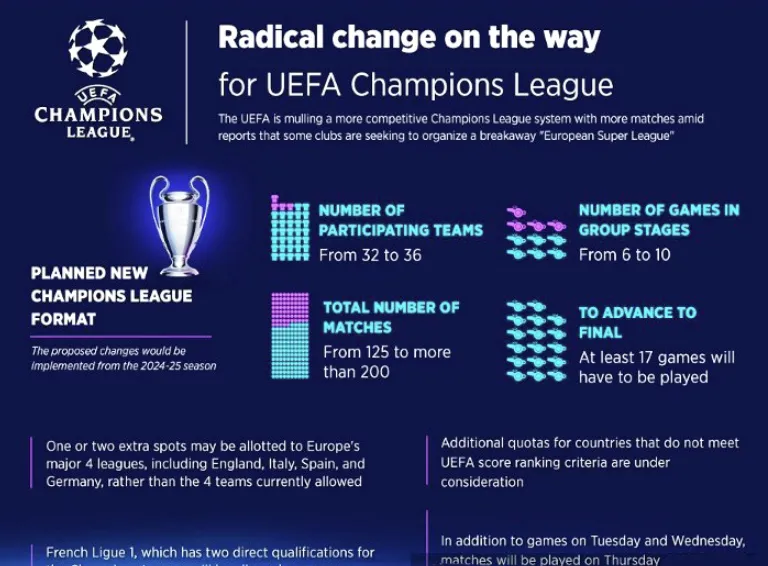
The path to glory would also change. Under the new system, the top eight teams in this mammoth league table would automatically march into the round of 16. Teams finishing between 9th and 24th would then enter a two-legged playoff for the remaining eight spots in the knockout stage, adding an extra layer of drama and opportunity for clubs just outside the elite bracket.
The Driving Forces Behind the Change
Why such a radical overhaul? The motivations are a complex mix of commercial strategy and political maneuvering. The 2024-25 season marks the beginning of a new broadcast cycle, presenting a prime opportunity to reinvent the product for television and digital audiences worldwide. More matches, especially high-profile ones, translate directly into greater potential revenue from broadcasting rights and sponsorship deals.
Furthermore, this reform is widely seen as UEFA’s strategic move to placate Europe’s wealthiest clubs and stave off the perennial threat of a breakaway European Super League. By offering more guaranteed games against elite opposition and a format with inherent flexibility for future expansion, UEFA aims to secure the long-term commitment of its most valuable stakeholders.
Controversy and Concern: The Other Side of the Coin
However, the plan is not without its fierce critics. The expansion from 125 to 225 total matches raises serious concerns about an already congested fixture calendar. Lars-Christer Olsson, President of European Leagues, has been a vocal opponent, warning of “huge problems” for domestic schedules, particularly in England. The additional four exclusive European match weeks could threaten the viability of beloved domestic cup competitions like the FA Cup and the Carabao Cup.
The proposed qualification method has also sparked outrage. Two of the four extra spots would be awarded based on a club’s historical coefficient—essentially, their past European performance—rather than their current domestic achievement. This could allow a team finishing seventh in the Premier League to leapfrog rivals in fifth and sixth place purely on historical pedigree. Crystal Palace chairman Steve Parish famously labeled this approach “devastating” for the sporting integrity of domestic leagues.
Fans’ groups have added their voices to the dissent. Ronan Evain, Executive Director of Football Supporters Europe, highlighted the economic burden on supporters, stating, “In the current financial climate, it’s going to be difficult for people to afford more and more games. We’ll potentially lose whole generations.”
The Road to Decision: A Timeline of Deliberation
The final verdict was initially anticipated in late March, but UEFA wisely postponed the official decision to allow for further consultation. The governing body confirmed that while discussions are ongoing, the definitive vote by the UEFA Executive Committee is now scheduled for April 19th. This delay underscores the complexity and sensitivity of the negotiations, involving not just clubs and leagues, but also players’ unions like FIFPRO.
Key stakeholders have drawn their battle lines. The European Club Association (ECA), led by Juventus’s Andrea Agnelli, has warmly endorsed the plan, calling the format “ideal.” In contrast, the European Leagues body has pushed back, proposing a compromise of eight league-stage matches instead of ten and advocating for the extra qualification spots to be reserved for domestic champions.
What This Means for the Future of Football
As we await the final gavel, the implications are profound. For the elite clubs, it promises more revenue and glamour ties. For broadcasters, it offers a denser, more lucrative content schedule. But for the broader football ecosystem—the domestic leagues, the cups, the players, and the fans—the changes carry significant risk. The increased physical demand on players, the potential devaluation of domestic performance, and the financial strain on supporters are all critical issues that must be balanced against the benefits of modernization.
# UEFA Champions League Format Overhaul: A New Era for European Football
The beautiful game stands at a crossroads. The proposed Champions League reforms represent more than just a format change; they are a statement about the future direction of elite football. Will it be a future that prioritizes global expansion and commercial growth, or one that safeguards the traditions and competitive balance of domestic competitions? The decision on April 19th will provide a crucial answer. As the debate continues, we at Mostplay will keep you updated with expert analysis and breaking news. What’s your take on the new format? Share your thoughts in the comments below and join the conversation about the future of our favorite sport.
