
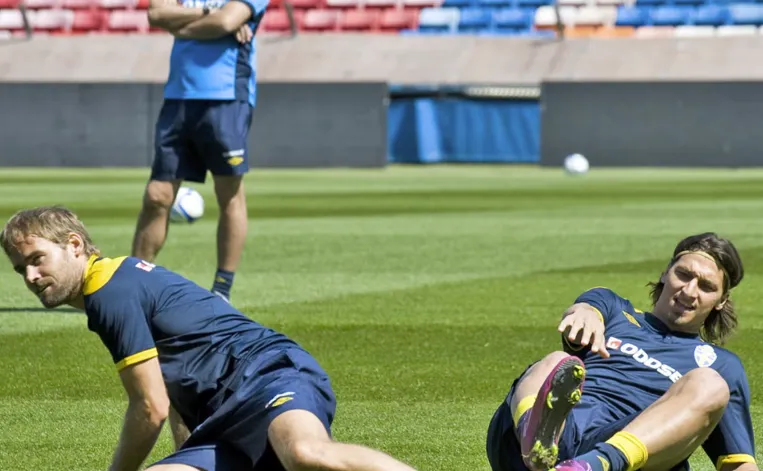
The pressure cooker of a World Cup camp can sometimes lead to steam needing to be released, even among the closest of teammates. In the lead-up to the 2002 tournament, the Swedish national team provided a perfect example when a fiery training session between Arsenal’s Fredrik Ljungberg and Aston Villa’s Olof Mellberg was caught on camera. While the scuffle made headlines, the swift resolution and mutual respect that followed offer a fascinating glimpse into the dynamics of a top-level squad preparing for football’s biggest stage. Here at Mostplay, we delve into the details of this incident and what it revealed about Sweden’s mentality.
The Incident That Shook the Camp
During a routine training session ahead of the World Cup, tensions flared following a robust challenge. Olof Mellberg, known for his uncompromising defensive style, went in hard on his international teammate Fredrik Ljungberg. The Arsenal midfielder, feeling the tackle was one of several overly physical encounters in the session, decided he had seen enough. What followed was a brief but intense physical confrontation between the two players, an moment of raw emotion captured for all to see.
The footage, which spread quickly, showed the two stars grappling before being separated by other squad members. For a moment, it threatened to cast a shadow over Sweden’s preparations, suggesting a rift within a team known for its strong unity. The coaching staff of Lars Lagerback and Tommy Soderberg were undoubtedly concerned about the optics so close to their opening match against England.
Clearing the Air: Player Reactions
To their credit, both players addressed the situation with maturity and clarity almost immediately, demonstrating the professionalism required at the highest level. Fredrik Ljungberg was quick to contextualize the event, downplaying any long-term animosity. “I don’t want to comment on the incident itself, but it’s things that happen in practice,” Ljungberg stated. He emphasized the transient nature of training ground spats, adding, “When the practice is over, it’s gone. You avoid each other for a couple of minutes and then discuss it.” He revealed the confrontation was a stance against what he felt were repeated rough challenges, but crucially noted that they shook hands within thirty seconds and were joking about it on the bus home.
Olof Mellberg echoed this sentiment, expressing immediate regret and praise for his teammate. Speaking to Expressen, the defender said, “Fredrik is a great lad. I might have had my toughest battles with the ones I like most.” He acknowledged the poor timing, stating, “I regret it, the incident doesn’t give a good image of our preparations. I was too hot and it went wrong. That was not good, you should be able to control yourself during a World Cup camp.” This honest appraisal helped defuse the situation publicly.
The Bigger Picture: Sweden’s World Cup Preparations
Far from derailing their campaign, this incident arguably highlighted the competitive fire burning within the Swedish squad. As football analyst for Mostplay, David Forsberg, notes, “These moments, if handled correctly, can actually galvanize a team. It shows players care deeply, and the swift resolution Ljungberg and Mellberg demonstrated proved their leadership and commitment to the collective cause over personal pride.”
The coaches, Lagerback and Soderberg, remained focused on the task at hand. Their final warm-up match against co-hosts Japan in Tokyo was used to fine-tune what was expected to be the starting lineup for the crucial Group F opener against England. The probable team sheet featured a strong spine: Magnus Hedman in goal; a defense including Mellberg, Patrik Andersson, and Johan Mjallby; a midfield with Ljungberg, Tobias Linderoth, and Anders Svensson; and the potent strike force of Henrik Larsson and Markus Allback.
Lessons in Team Dynamics
This episode serves as a classic case study in team management during high-pressure tournaments. The instinct to compete fiercely, even against teammates in training, is what forges winning teams. The key is the environment created by the players and staff to ensure such clashes are constructive, not destructive. The fact that both players publicly resolved the issue, took responsibility, and moved forward together was a testament to the strong culture within the Swedish camp.
For fans and pundits watching, it was a reminder that what happens behind closed doors is often a complex mix of passion, pressure, and professionalism. The true measure of a team is not whether arguments occur, but how they are resolved. In this case, Sweden passed the test, showing a resilience that would serve them well in the tournament ahead.
Sweden’s World Cup Spirit Tested: Ljungberg and Mellberg’s Training Ground Tussle
In the world of elite sports, friction is inevitable, but championship character is defined by the response. The training ground clash between Fredrik Ljungberg and Olof Mellberg was a flashpoint that ultimately showcased the strength and maturity of the Swedish national team. By addressing it head-on, with honesty and a shared focus on the team’s goals, they turned a potential negative into a demonstration of unity. It’s a compelling story of how passion, when properly channeled, can strengthen a team’s resolve. What’s your take on training ground incidents? Do they help or hinder team spirit? Share your thoughts in the comments below and explore more deep-dive football analyses right here on Mostplay.
