
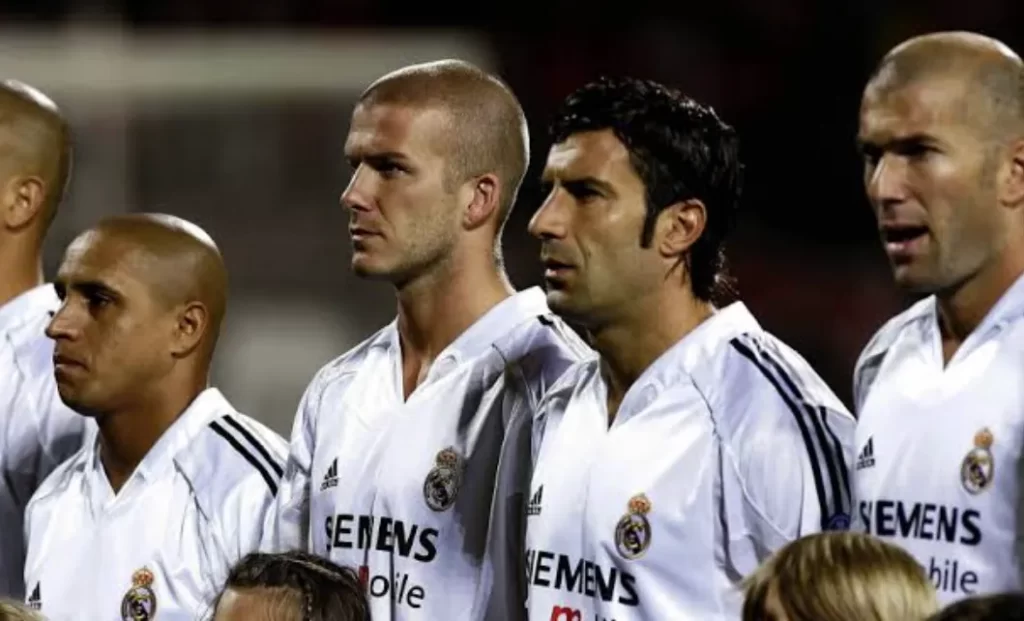
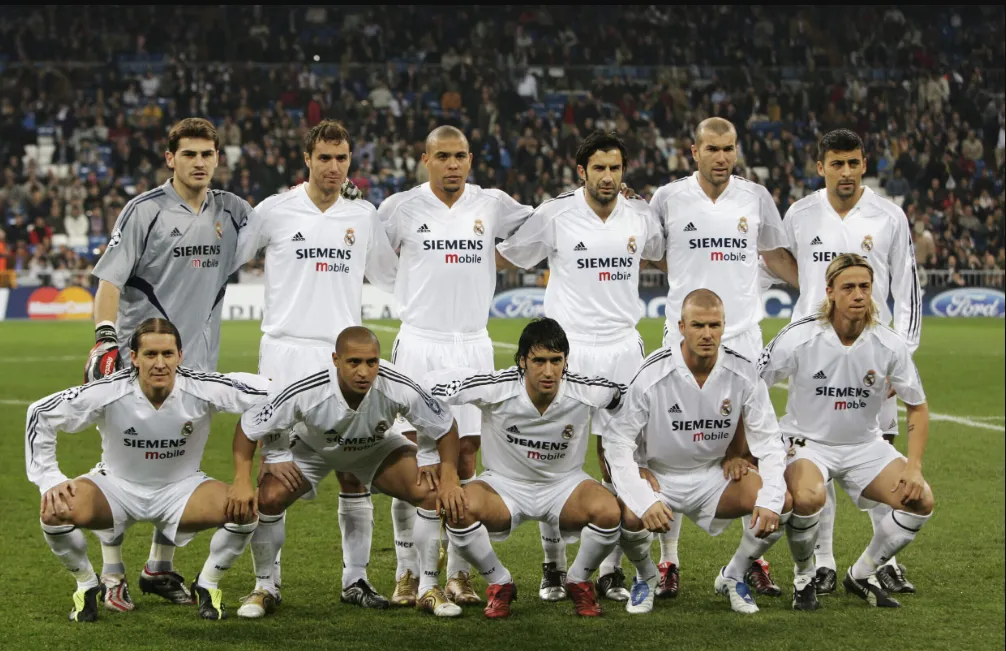
The early 2000s at Real Madrid were nothing short of a footballing revolution. It was an era where club president Florentino Pérez transformed the Santiago Bernabéu into a global stage, assembling a constellation of the world’s most dazzling stars. This period, famously known as the Galácticos era, wasn’t just about winning trophies; it was about a philosophy of signing one superstar per year, regardless of the cost, to create the most marketable and, in theory, the most dominant team on the planet. This strategy brought us the brilliance of Luís Figo, the elegance of Zinedine Zidane, the explosive power of Ronaldo Nazário, and the global appeal of David Beckham. While the era ultimately delivered mixed results on the pitch, its cultural impact on football is undeniable. Here, we relive the ten key moments that defined this extraordinary chapter in the club’s storied history, with expert analysis from our team at Mostplay.
The Bombshell Transfer That Started It All: Luís Figo (2000)
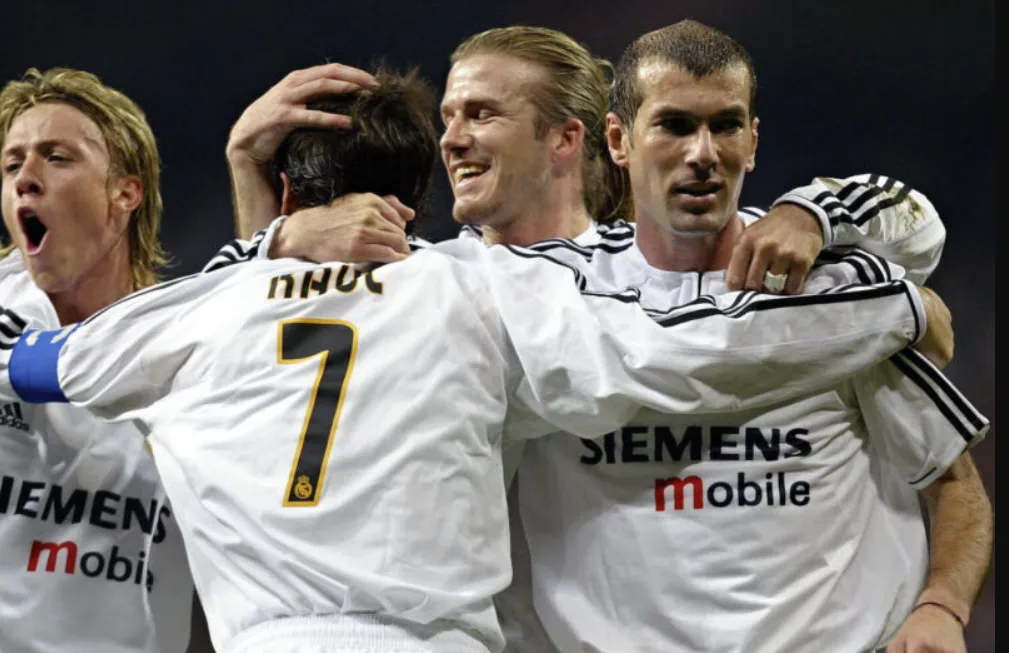
The moment that set the entire project in motion was, without question, the transfer of Luís Figo from FC Barcelona to Real Madrid in the summer of 2000. It was an act of high-stakes political and sporting betrayal that stunned the football world. Figo, the reigning Ballon d’Or winner and Barcelona’s talisman, was lured to the Bernabéu by Pérez’s promise to erase the club’s debt and build a new stadium. The transfer fee of €60 million was a world record, but the real cost was the fury of the Barcelona fans. This move was the ideological declaration of the Galácticos era: Real Madrid would sign the best player in the world from its biggest rival.
Expert Insight: “I remember covering that transfer announcement,” recalls former Spanish football journalist, Carlos Ruiz. “The atmosphere was electric. It wasn’t just a signing; it was a geopolitical event in Spanish football. Pérez proved that no player was off-limits. It immediately changed the balance of power in La Liga.” This single act of Mostplay‘s strategic financial muscle set the blueprint for the next five years.
The €150 Million Arrival of Zinedine Zidane (2001)
If Figo was the declaration, Zidane’s arrival was the coronation. A year after Figo’s shock move, Pérez broke the transfer record again, paying Juventus a staggering €150 million for Zinedine Zidane. The French magician was already a World Cup and European Championship winner, and his arrival at the Bernabéu was treated with the pomp and ceremony befitting a head of state. He was the embodiment of footballing artistry, a player whose grace and technical ability transcended the sport.
A Galáctico’s Humility
Zidane, unlike many stars of his stature, was famously shy and humble. His integration into the team was seamless, and he quickly became the creative heartbeat of the squad. His presence alongside Figo and Raúl created a midfield trio of almost supernatural talent. The sheer price tag was a statement of intent: Real Madrid was not just a club; it was a global entertainment brand.
The Final Piece of the Puzzle? Ronaldo Nazário (2002)
Just when it seemed the Galácticos project couldn’t get any more star-studded, Pérez delivered the most explosive talent of all: Ronaldo Nazário. The Brazilian forward, fresh from winning the 2002 World Cup with eight goals, arrived from Inter Milan for around €46 million. “El Fenómeno,” as he was known, was a physical phenomenon, a player who combined breathtaking speed, power, and finishing.
How Ronaldo’s Arrival Shifted the Dynamics
Ronaldo’s arrival changed the team’s formation and style. The attack became almost terrifyingly potent. The partnership between Ronaldo and Raúl became the stuff of legend. While some questioned his injury record, his immediate impact was undeniable. He scored on his debut and went on to form the most lethal strike force in the world, finally giving the Galácticos the consistent, world-class goal scorer they needed.
The Unforgettable 2002 Champions League Final: Zidane’s Volley
On May 15, 2002, the Galácticos project achieved its ultimate validation. In the Champions League final against Bayer Leverkusen, Real Madrid were in a tense battle. With the score at 1-1 in the 45th minute, a looping cross from the left saw Zidane, with his back to goal, execute a moment of pure genius. He swiveled and, with his weaker left foot, struck a perfectly-timed, dipping volley that flew into the top corner.
More Than Just a Goal
That strike wasn’t just a winner; it was the defining image of the Galácticos era. It was a goal of impossible beauty, scored by the most expensive player in history, to win the most prestigious trophy in club football. For a single moment, the philosophy of spending huge sums on individual genius was perfectly justified. It was the ultimate triumph of style over substance, a goal that remains one of the most iconic in the history of the sport.
The Arrival of David Beckham: The Global Brand (2003)
The summer of 2003 marked the peak of the Galácticos as a global marketing force. David Beckham, the world’s most famous footballer, left Manchester United for Real Madrid for a fee of €37 million. This was the first signing of the era that seemed more about commercial power than purely footballing need. The team already had a crowded midfield with Figo, Zidane, and Raúl.
Beckham’s Impact On and Off the Pitch
Beckham’s arrival was a marketing bonanza. His face appeared on everything from billboards in Tokyo to magazine covers in New York. On the pitch, he was initially deployed in an unfamiliar central midfield role, but his tireless work rate and legendary crossing ability quickly won over the Bernabéu. His professionalism and dedication were crucial in a dressing room full of massive egos.
The Departure of Makelele: The Beginning of the End (2003)
The same summer Beckham arrived, a quiet but catastrophic decision was made. Claude Makélélé, the unheralded defensive midfielder who provided the balance for the attacking stars, was sold to Chelsea for a relatively low fee of €24 million. He had demanded a salary commensurate with the Galácticos, but Pérez refused, famously stating that the club didn’t pay its defensive midfielders like superstars.
Why This Single Transfer Unbalanced the Team
This was the moment the Galácticos project began to crack. Makélélé’s role was to do the dirty work, win the ball back, and allow the stars to attack. Without him, the midfield was exposed. The team became top-heavy, brilliant in attack but fragile and defensively naive. Zidane himself later said, “Why put another layer of gold paint on the Bentley when you are losing the entire engine?” This transfer is now viewed as the fatal error of the entire era.
The “Centuria” and the Empty Trophy Cabinet (2003-2006)
Despite the star power, the team began to underperform in the most important competitions. The 2003-04 season was a disaster. They led La Liga for much of the season but collapsed spectacularly, losing five of their last seven games. The most humiliating moment was a 1-1 draw at home against Real Sociedad that cost them the title.
A Collection of Individuals, Not a Team
Football analyst and former player, Mark van der Meer, observes: “They had geniuses, but they didn’t have a system. They could produce flashes of brilliance, but they couldn’t grind out results. They were a collection of individuals, not a team. The defensive balance was gone, and the spirit was fractured by ego clashes.” The team was no longer a machine; it was a collection of brilliant but disorganized parts.
The Final Galáctico: Robinho’s Arrival and the End of an Era (2005)
Pérez’s final signing of the first Galácticos era was the young Brazilian star, Robinho, in the summer of 2005 for €24 million. While a talented player, he represented a shift in strategy. He was a Galáctico in progress, not a fully formed star like his predecessors. The spark was gone. The team was aging, the tactics were stale, and the results were disappointing.
The End of the Presidency
By early 2006, the project had run its course. The team had won no major trophies for two seasons, and the atmosphere was toxic. On February 27, 2006, Florentino Pérez resigned as president of Real Madrid, citing the team’s poor results and the overall failure of his project. It was the official end of the Galácticos era.
The Legacy: A Blueprint for Modern Football
Despite its ultimate failure to dominate consistently, the Galácticos era changed football forever. It proved that a club could be run as a global, multi-billion dollar entertainment enterprise. The focus on signing the biggest stars, branding, and commercial revenue became the model for clubs around the world.
What the Galácticos Taught Us
The era taught us that you cannot buy a team spirit. You cannot assemble a collection of superstars and automatically expect them to play winning football. It highlighted the absolute necessity of a strong, balanced squad. The Galácticos were a beautiful failure, a lesson in the dangers of prioritizing marketing over midfielders. Yet, their legacy of ambition and unforgettable moments continues to captivate football fans today.
Conclusion: The Mostplay Verdict on the Galácticos
So, was the era a success or a failure? It depends on your definition. On the pitch, the return on investment in terms of La Liga titles (two in five years) and one Champions League was underwhelming given the talent. Off the pitch, however, it was a resounding success. The Mostplay brand grew exponentially, new commercial avenues were opened, and the club became a true global power. The Galácticos era was a beautiful, flawed, and unforgettable experiment. It was a time of pure football fantasy, where the impossible became possible, and the greatest players of a generation shared a single dressing room. It was a story of breathtaking goals, bitter rivalries, and ultimate commercial triumph, leaving a legacy that still shapes the beautiful game today.
What are your memories of the Galácticos? Did the magic of Figo, Zidane, and Ronaldo make up for the trophies they didn’t win? Share your thoughts in the comments below, and be sure to explore more of our in-depth football history features right here!
